A Guide to Swimming in Big Bear Lake: Where to Go and Safety Rules
Cooling off in the clear mountain waters of Big Bear Lake is a highlight of any summer trip. To ensure everyone has a safe and enjoyable time, it is important to understand the local regulations regarding where you can swim and how to stay safe on the water.
Where Can You Swim?
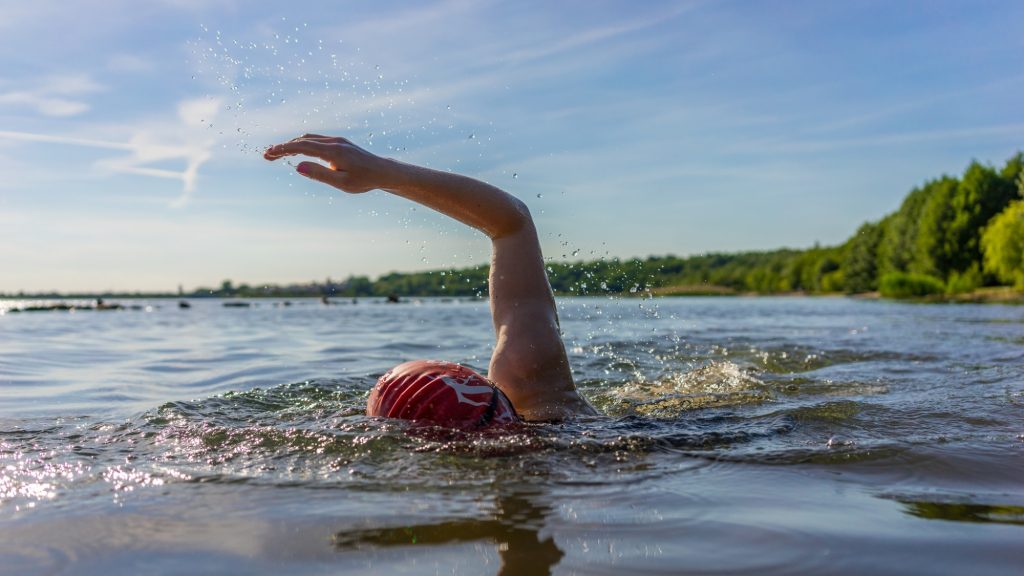
Swimming in Big Bear Lake is allowed, but it is restricted to specific zones to keep everyone safe.
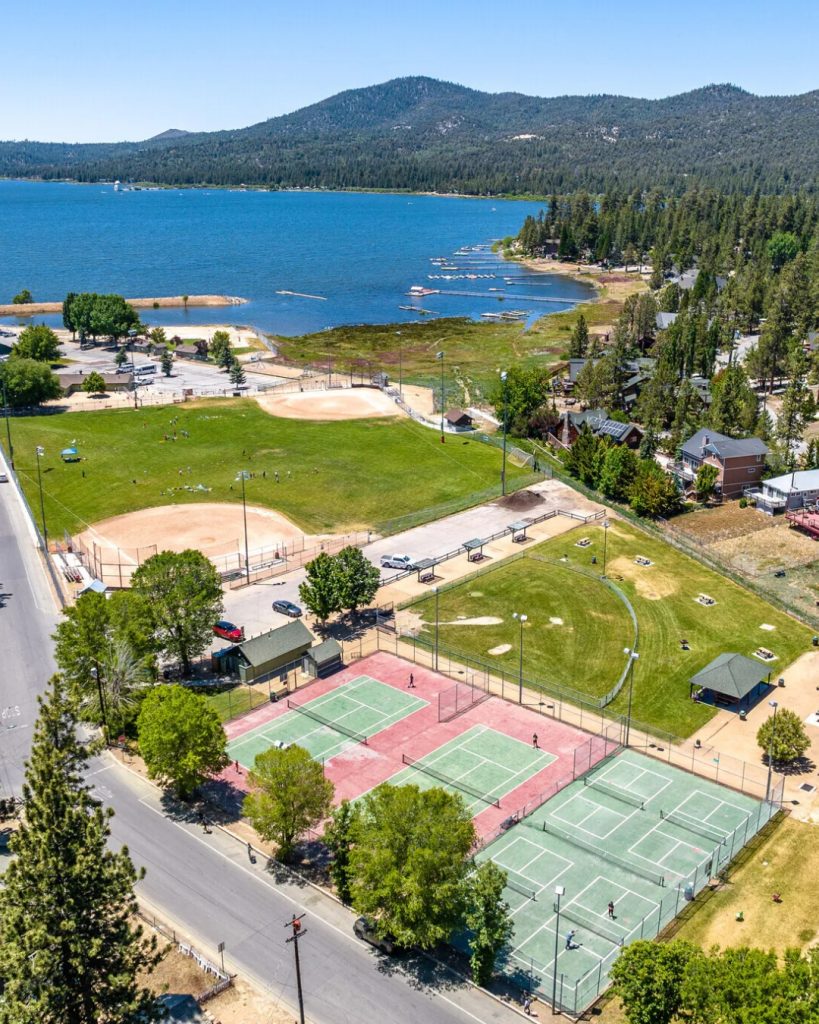
This is the most popular spot for families, as it is the only area on the lake with lifeguards on duty during the summer months. It features a sandy beach, snack bar, floating dock, and public restrooms.
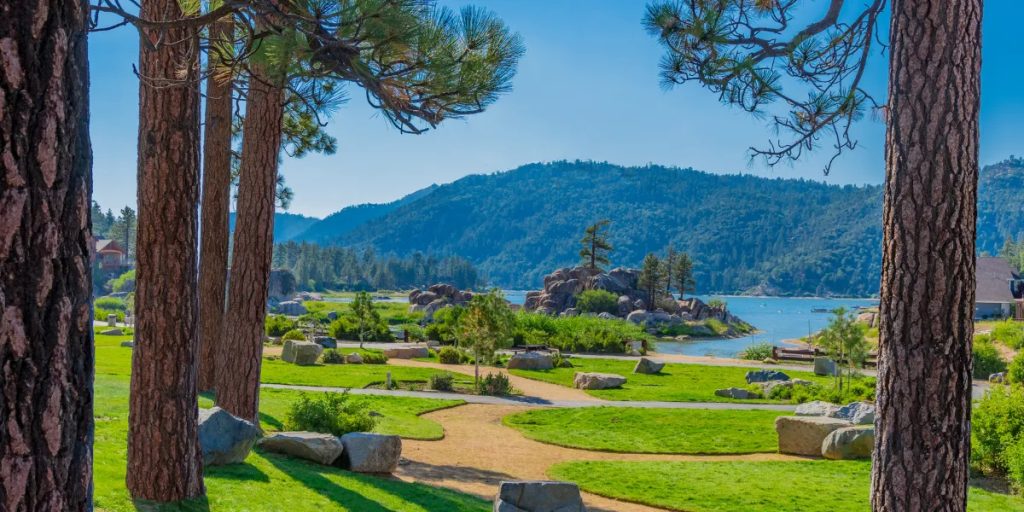
Shoreline Access
You can enter the water from the shore at various public locations, including Boulder Bay Park, Veterans Park, and Pine Knot Rotary Park.
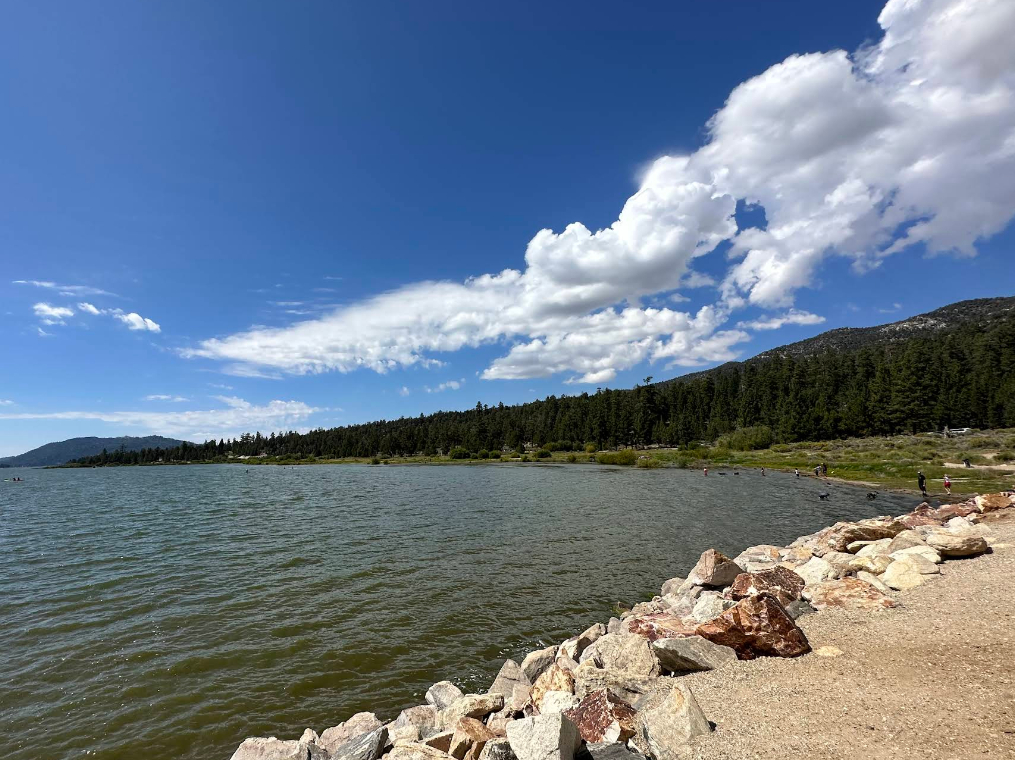
Other Wading Spots:
Adventurous swimmers can find various wading spots around the lake, such as the area near China Island or the beach area just east of the Discovery Center.
Essential Safety & Lake Regulations
Before you head to the water, please keep these critical rules in mind to protect yourself and the lake’s ecosystem:
The 50-Foot Rule: Per the Big Bear Municipal Water District, you are only permitted to swim within 50 feet of the shore, within a designated swimming area, or within 20 feet of a private dock.
No Swimming from Rental Boats: For safety reasons, swimming is not allowed off of pontoon boats or other rental vessels. Rental boats are required to stay in deeper water—well beyond the 50-foot swimming zone—to avoid underwater hazards.
Swim at Your Own Risk: Outside of the lifeguarded area at Meadow Park, there are no lifeguards on duty. Always swim with a partner and know your personal swimming abilities.
Water Temperature: The lake’s mountain water can be colder than you expect, even in the summer. Cold water shock can lead to an immediate loss of breathing control, so enter the water gradually.
Boulder Bay Adventures & Bike-Friendly Cabins
Rent a bike with Get Boards and have the bikes delivered to your cabin for $25, or use them to rent kayaks for your lake adventure!
Elevation & Outdoor Safety Note: Sitting at an elevation of roughly 6,750 feet, Big Bear’s mountain air means thinner atmosphere and a higher risk of sunburn. Be sure to pack plenty of sunscreen and an umbrella or sun shade when walking, biking, or exploring the park.
Local Dining: Grab a bite close to the bay at local favorites like Piza Kama for a quick meal after a day on the water.
Closest Boat Rentals: Boulder Bay is also close to Pleasure Point Marina, making it the closest spot to rent, pontoon boats or a go-boat for exploring the lake.
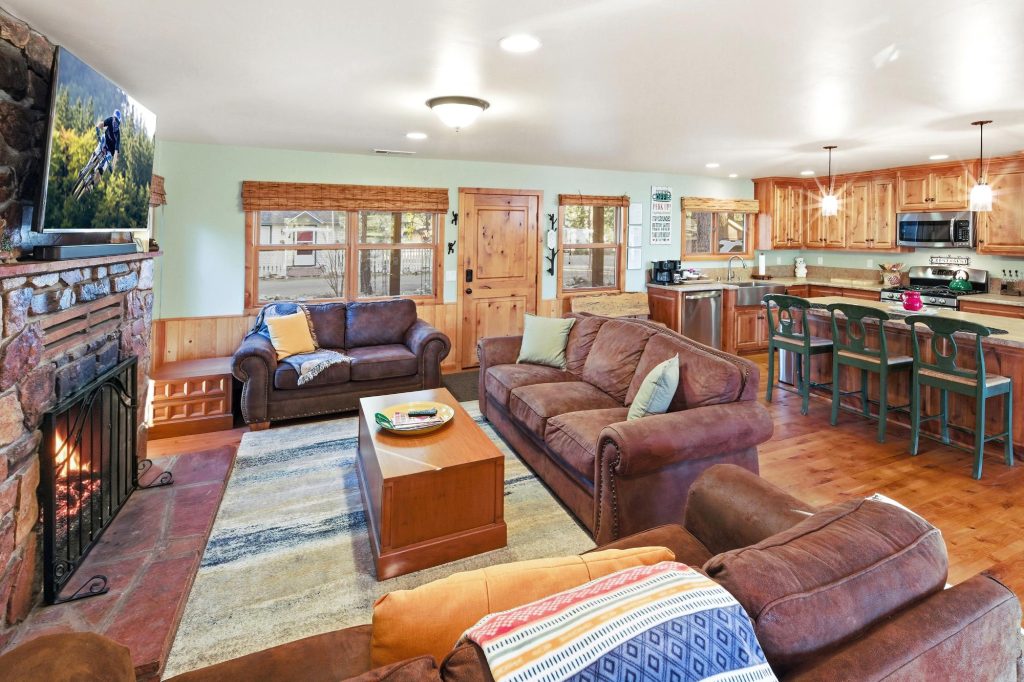
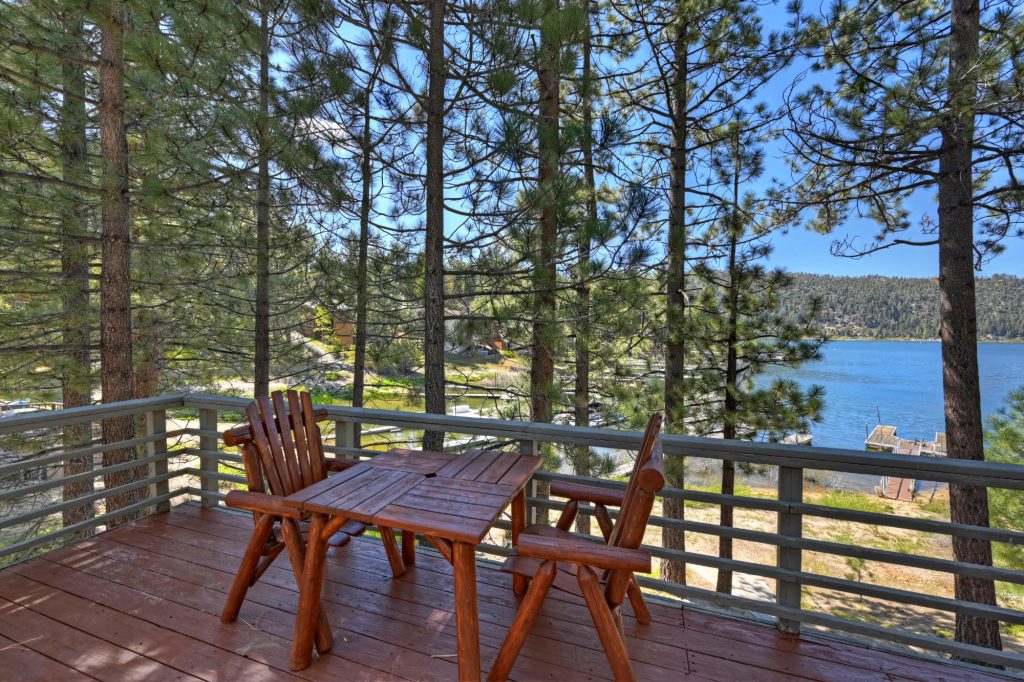
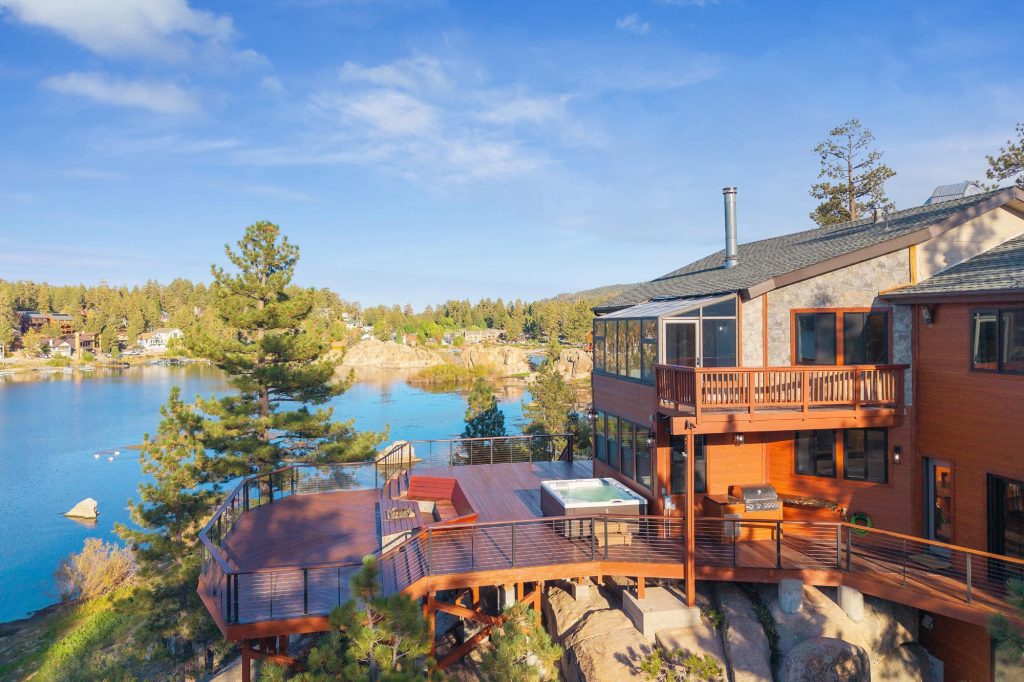
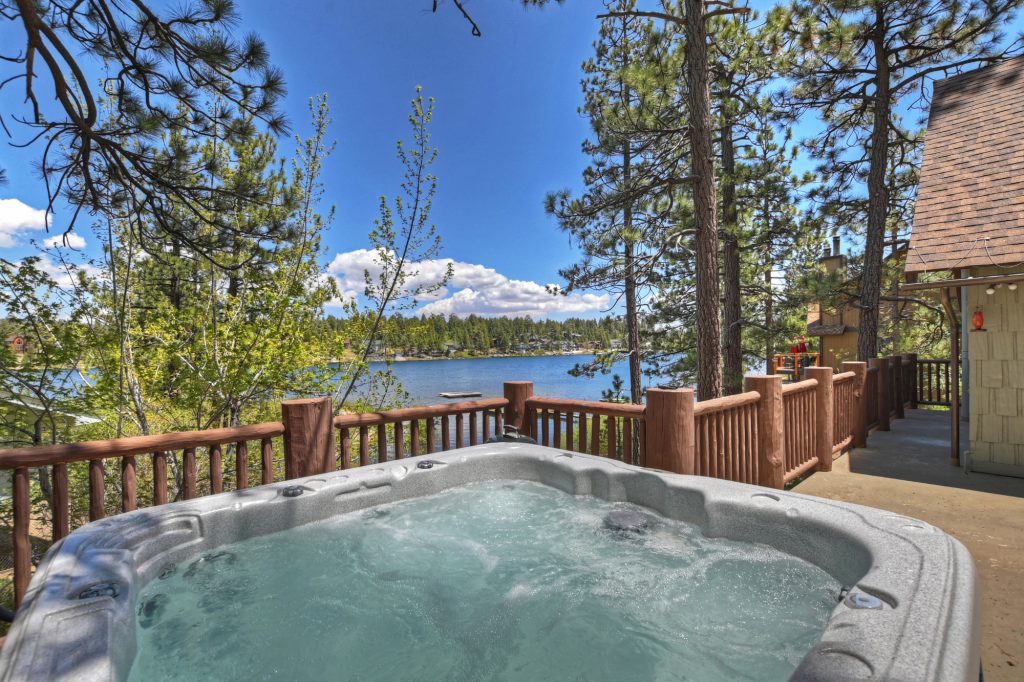
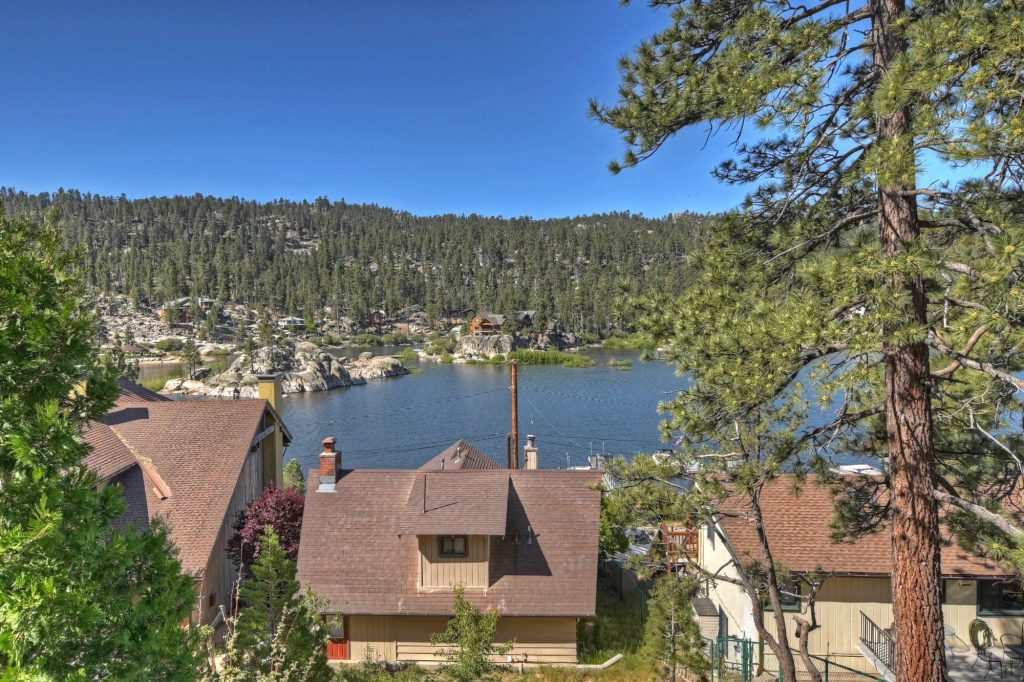
Pine Knot Rotary Park + Veterans Park Adventures & Walk- and Bike-friendly Cabins
Location: Rotary Park and Veterans Park are located within walking distance of the bustling Village, which features most of Big Bear’s restaurants, shopping, and nightlife. The two parks sit adjacent to each other with Pine Knot Marina right in between.
Parking: Please note that weekend parking at Pine Knot Marina is cash-only and not free, though you can utilize three free public parking lots in the Village: the closest one off Bartlett, another behind Oakside Restaurant, and one off Knickerbocker Road.
Park Features: These parks feature a playground, restrooms, a gazebo, and open grass to lounge on, making them popular spots for hosting children’s birthday parties. Swimming here offers a lively park-side lake experience right next to the marina’s activity.
Rent a bike with Get Boards and have the bikes delivered to your cabin for $25, or use them to rent kayaks for your lake adventure!


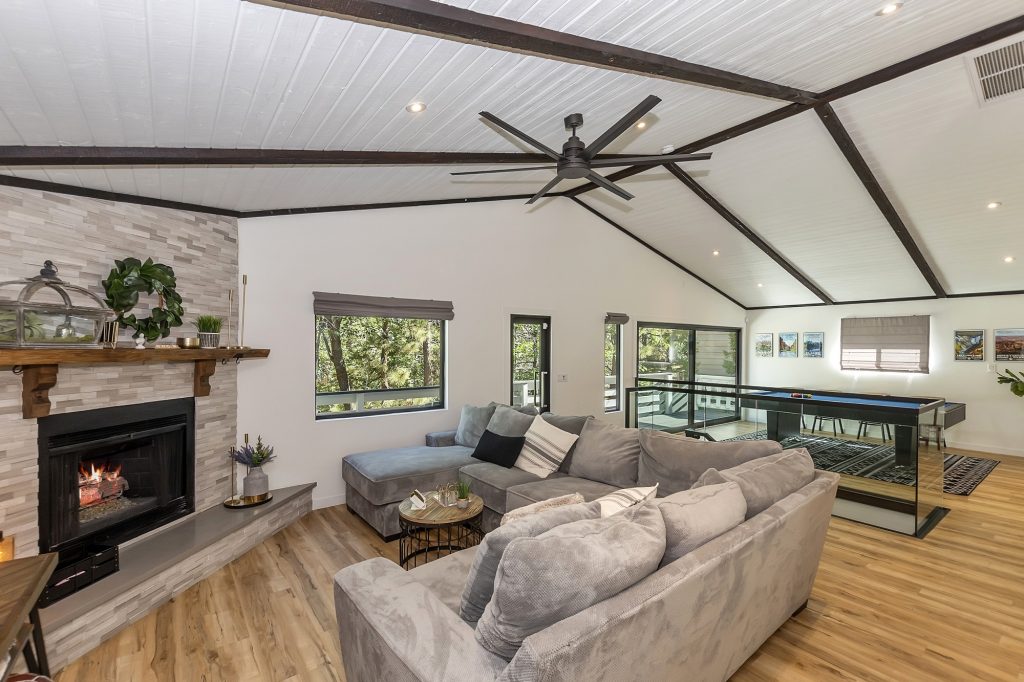
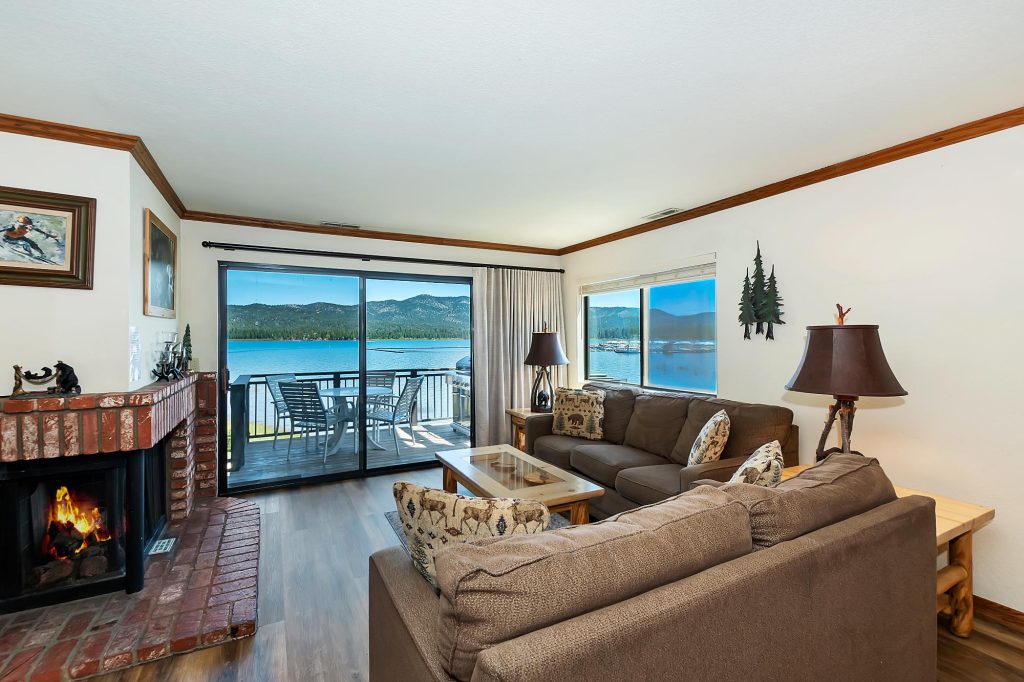
Swim Beach at Meadows Park Walk- and Biking-friendly Cabins
Meadow Park is the largest park in Big Bear, offering a wide array of activities and serving as a prime location for many local events. It features a large parking lot and is only a short drive away from the Village.
Rent a bike with Get Boards and have the bikes delivered to your cabin for $25, or use them to rent kayaks for your lake adventure!
- Elevation & Outdoor Safety Note: Sitting at a high mountain elevation, Big Bear’s atmosphere increases the risk of sunburn. Be sure to pack plenty of sunscreen and an umbrella or sun shade when walking, biking, or enjoying the park grounds.
- Swimming Info: As home to Big Bear’s premier Swim Beach, this park provides a dedicated sandy shore and designated swimming waters for a classic lake day.