

Big Bear Vacation Rental Owner Costs & Management Fees
Owning a vacation rental in Big Bear can provide an opportunity to earn rental income, but understanding the expenses involved is essential before purchasing or listing your property.
The cost of owning a vacation rental in Big Bear includes more than your mortgage and property taxes. Homeowners should also budget for short-term rental permits, property management, cleaning, maintenance, utilities, and seasonal expenses such as snow removal.
This guide breaks down common Big Bear vacation rental owner costs to help you evaluate your property’s potential and plan for ongoing expenses. Actual costs vary by property, location, usage, and service provider.
What Big Bear homeowners should know about rental expenses, property management fees, and comparing vacation rental management companies.
What Does It Cost to Own a Vacation Rental in Big Bear?
The cost of operating a Big Bear vacation rental depends on several factors, including the property’s size, location, amenities, condition, and frequency of guest stays.
A larger luxury cabin with a hot tub, game room, and extensive outdoor areas will generally have different operating expenses than a smaller mountain retreat.
Owners should evaluate expenses in five categories:
| Expense category | What it includes |
| Startup and Compliance | Permits, inspections, safety improvements, initial cleaning, furnishing |
| Recurring Property Expenses | Utilities, insurance, taxes, internet, snow removal, spa service |
| Owner Stay Cleaning Fee | Cleaning fees after owner has stayed. Varies based on owner usage. |
| Maintenance and Improvements | Repairs, seasonal upkeep, furniture replacement, renovations |
| Management | Property management fees, marketing, distribution costs, any separately billed services, cleaning, laundry, consumables, inspections. |
Big Bear Vacation Rental Startup Costs
Before accepting reservations, a vacation rental must meet the applicable short-term rental requirements for its location.
Short-Term Rental Permits and Inspections
Properties in the incorporated City of Big Bear Lake and unincorporated areas of San Bernardino County are subject to different permitting and operating requirements.
Depending on the jurisdiction, owners may need to budget for:
- Short-term rental permit applications and renewals
- Required inspections
- Fire and life-safety equipment
- Occupancy and parking compliance
- Property signage and emergency information
- Corrections identified during inspections
Big Bear Annual Short-Term Rental Permit Costs and Registration Fees
The Big Bear vacation rental registration fee depends on whether your property falls within the City of Big Bear Lake or unincorporated San Bernardino County. Each jurisdiction has its own application, inspection, renewal, and compliance requirements.
Before budgeting for a short-term rental permit, confirm the current fees and requirements with the jurisdiction responsible for your property.
- City of Big Bear Lake Registration/Annual Renewal Fee: $550
- County bi-annual renewal fee: $489
- County Application Fee: $677 (Good for 2 years)
- County transfer (same agency/new owner): $109
Parts of the process are coordinating what costs are billed to the homeowner, and whether owners may use their preferred contractors for required improvements.
Big Bear Property Management Fees: What’s Included?
Property management is another expense to consider when evaluating a Big Bear vacation rental. Professional management fees vary depending on the company, property, and services provided.
Vacation rental management may include:
- Property marketing and listing distribution
- Reservation management and guest communication
- Dynamic pricing and revenue management
- Cleaning and maintenance coordination
- Guest check-in support and local assistance
- Homeowner reporting and operational oversight
When comparing Big Bear property management fees, look beyond the commission percentage. Ask which services are included, which are billed separately, and how the company manages guest experiences and property upkeep.
Destination Big Bear provides local vacation rental management services and can discuss the costs associated with managing your specific property.
Big Bear Vacation Rental Taxes: What Should Owners Budget For?
Taxes are another important consideration when calculating the cost of owning a Big Bear vacation rental.
Homeowners should distinguish between property-related taxes and taxes associated with short-term rental bookings.
Property taxes are an ongoing ownership expense, while transient occupancy taxes and other applicable lodging assessments may be collected from guests and remitted according to local requirements.
Tax obligations and collection responsibilities depend on the property’s jurisdiction and booking arrangements. Homeowners should confirm applicable requirements with the City of Big Bear Lake or San Bernardino County and consult a qualified tax professional regarding their individual circumstances.
Preparing Your Cabin for Guests
A successful vacation rental needs more than attractive furniture and a listing.

Some homes require only minor adjustments. Others may need substantial preparation before they are ready for rental guests.
Big Bear Cabin Operating Expenses: Cleaning, Hot Tubs, Snow Removal and Maintenance
Ongoing Big Bear cabin operating expenses depend on your property’s size, amenities, booking frequency, and seasonal maintenance needs.
For example, vacation rental cleaning fees in Big Bear can vary based on the number of bedrooms, bathrooms, and overall cleaning requirements. Cabins with hot tubs, larger outdoor spaces, or steep driveways may also require additional servicing throughout the year.
The following estimates provide a starting point for understanding common operating costs. Actual vendor charges may vary.

Cleaning costs depend on the size of the home, the number of bedrooms and bathrooms, the condition of the property, and the services required between reservations.
For budgeting purposes, Destination Big Bear’s homeowner onboarding materials identify general cleaning costs ranging from approximately $70-550, depending on property size and service requirements. The home owner is charged the hourly rate of what we actually are billed from the cleaner. However, if you book to your guests/tenants – the fee is the normal tenant fee.
These are illustrative operating costs, not guaranteed cleaning rates.
Annual Cleaning Fees:
- Deep Cleaning/Spring Cleaning: $150-700 depending on size of home
- Abatement: A city requirement
Homeowners should ask when comparing management companies whether cleaning is charged per reservation, whether guests pay a separate cleaning fee, and which services remain the owner’s responsibility.
Additional deep cleaning, carpet cleaning, upholstery care, and laundry services may be necessary throughout the year.
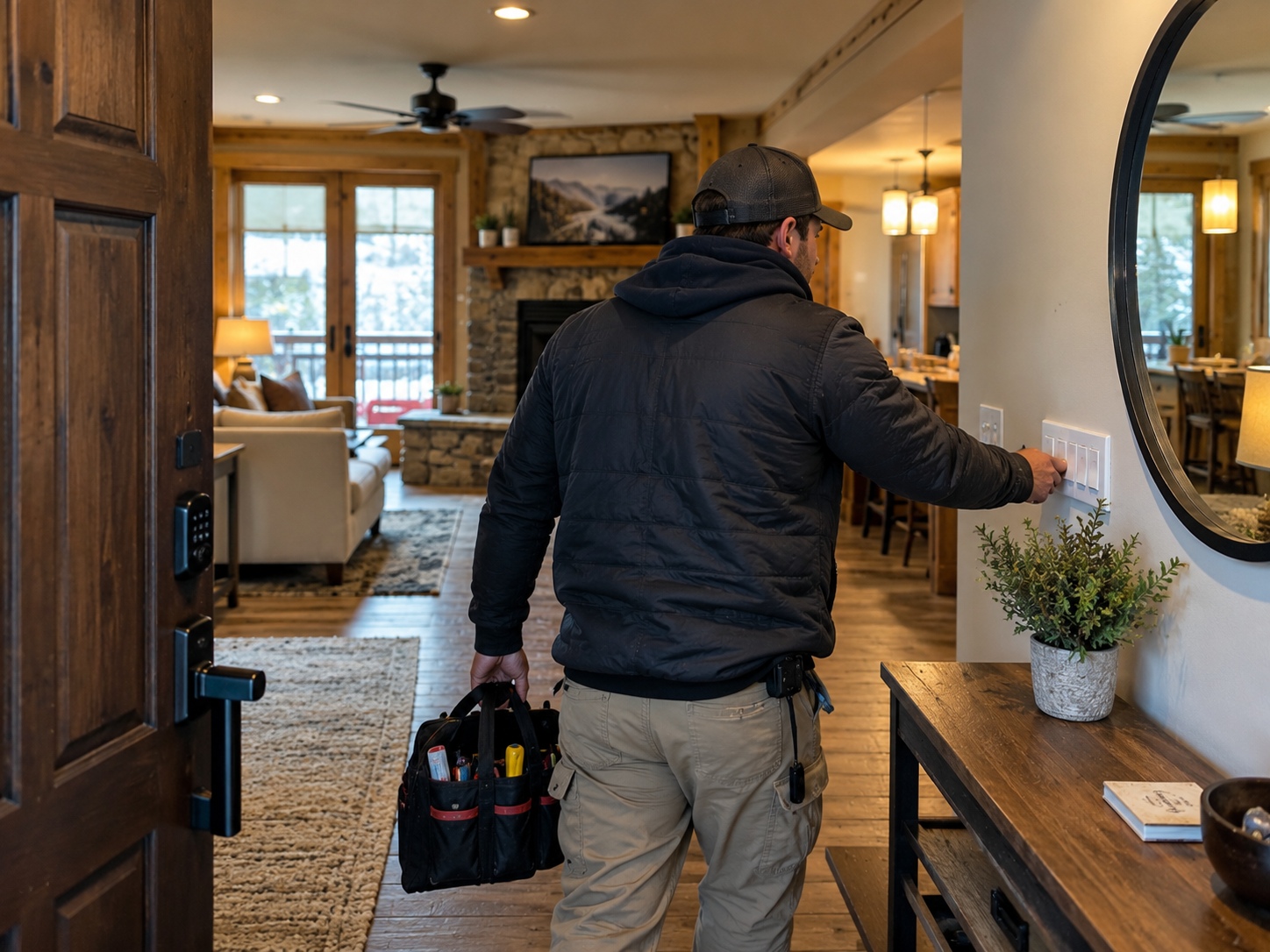
Open Fee for your guests/yourself: $25
An opening fee includes preparing your home for a guest’s arrival – Turn some lights on, water on, heat turned up, water heaters turned up, hot tub turned up.
Closing Fee: $25
A closing fee includes a proper close is done to check for damages/missing items; check for cleanliness of home; turn off lights; heat down; turn water heater down; lock doors/windows, etc.
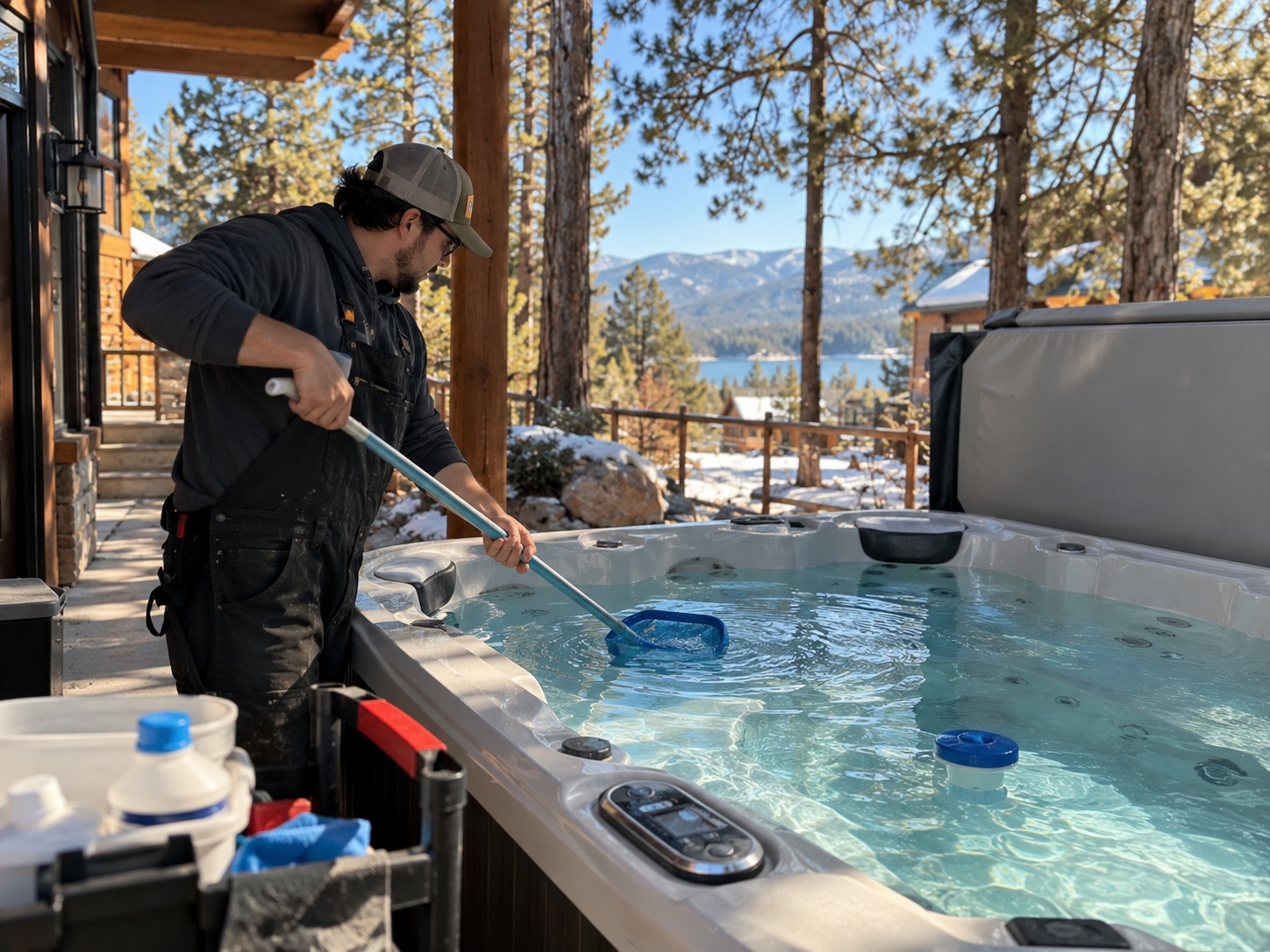
Hot tubs are popular amenities in Big Bear vacation rentals, but they introduce additional operating responsibilities.
Costs may include:
- Regular Weekly Cleaning: $100-150 per month
- Back to Back Cleaning: $25
- Necessary Tub Refill is around $80-$125
- Needed occasionally as chemicals can only do so much after so many bookings
When comparing management companies, ask who coordinates spa service, how frequently the spa is inspected, and how maintenance issues are communicated to the homeowner.
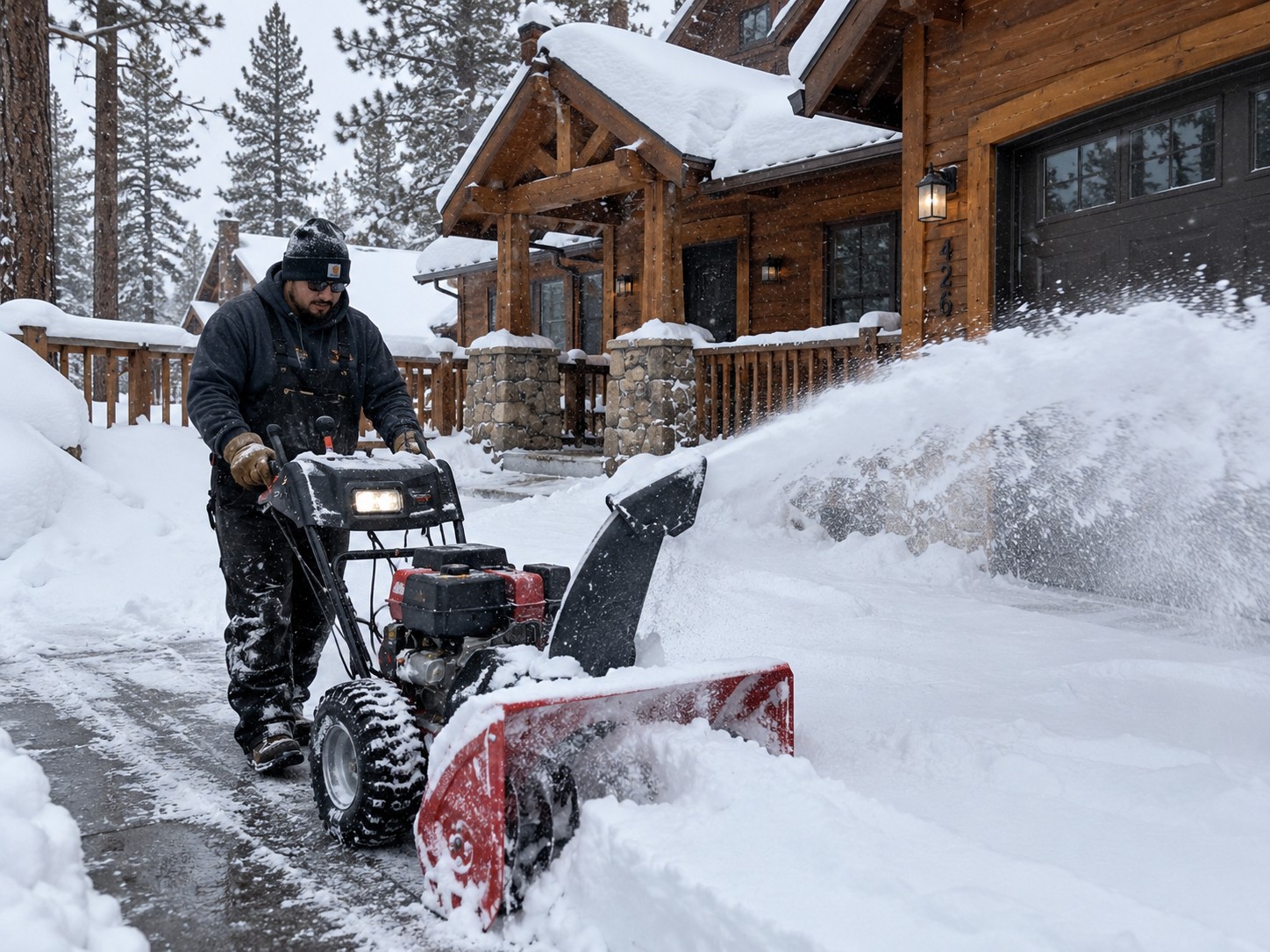
Big Bear’s winter season creates expenses that owners in warmer vacation destinations may not encounter.
Snow removal may include clearing driveways, walkways, stairs, and access routes.
Costs vary depending on snowfall, property layout, accessibility, and whether service is arranged per visit or through a seasonal agreement.
Snow removal starts at approximately $75+ per service, with actual costs depending on the property and vendor. Along with additional fees for hand shoveling decks, walkways, etc.
Owners should also budget for heating-system maintenance, frozen-pipe prevention, snow-related repairs, and winter supplies.
Typical recurring expenses include electricity, gas, water, trash service, internet, and appropriate property insurance.
Utility expenses are not always directly proportional to occupancy. A mountain home may require heating and other essential services even when no guests are present.
Homeowners should also confirm that their insurance coverage is appropriate for short-term rental activity, rather than assuming a standard second-home policy provides sufficient protection.
Guest use can increase the frequency of routine repairs and replacements.
Common expenses include:
- Light bulbs and batteries need frequent replacement
- Dishes, utensils, and small appliances sometimes crack, stop working
- Shower curtains and liner replacements
- DVD players and remote controls sometimes stop working properly
- Lamp switches and shades can show wear
- Carpet cleanings two or three times per year
- Vacuum cleaners do not last forever (our cleaners use their own, but you will want one on hand for guests, too)
- Towel racks, curtain rods, tiebacks, and toilet paper holders come out of drywall.
- Normal wear and tear on furniture and carpet, or stains from spills
- Kitchen cabinet handles, door hinges, and screen doors will loosen
- Kitchen tables and chairs can get dents or become loose
- Blinds falls apart easily, we suggest using curtains.
- Window cleaning and screen replacement
- Propane tanks for grills
- Paint touch-ups inside and out
- Game table pieces/supplies
- Fridge parts
- Filter
These expenses should be part of the operating budget, even when a property is well maintained and guests treat it respectfully.

The lower advertised commission does not necessarily result in lower overall management costs.
The reverse can also be true. A lower-fee company may offer better value when its services meet the property’s needs.
The comparison should also consider differences in rental revenue, guest experience, and the amount of work remaining for the homeowner.
How to Estimate Your Vacation Rental’s Net Income
Gross rental revenue is only one part of a vacation rental’s financial performance.
To understand what your property may earn, estimate:
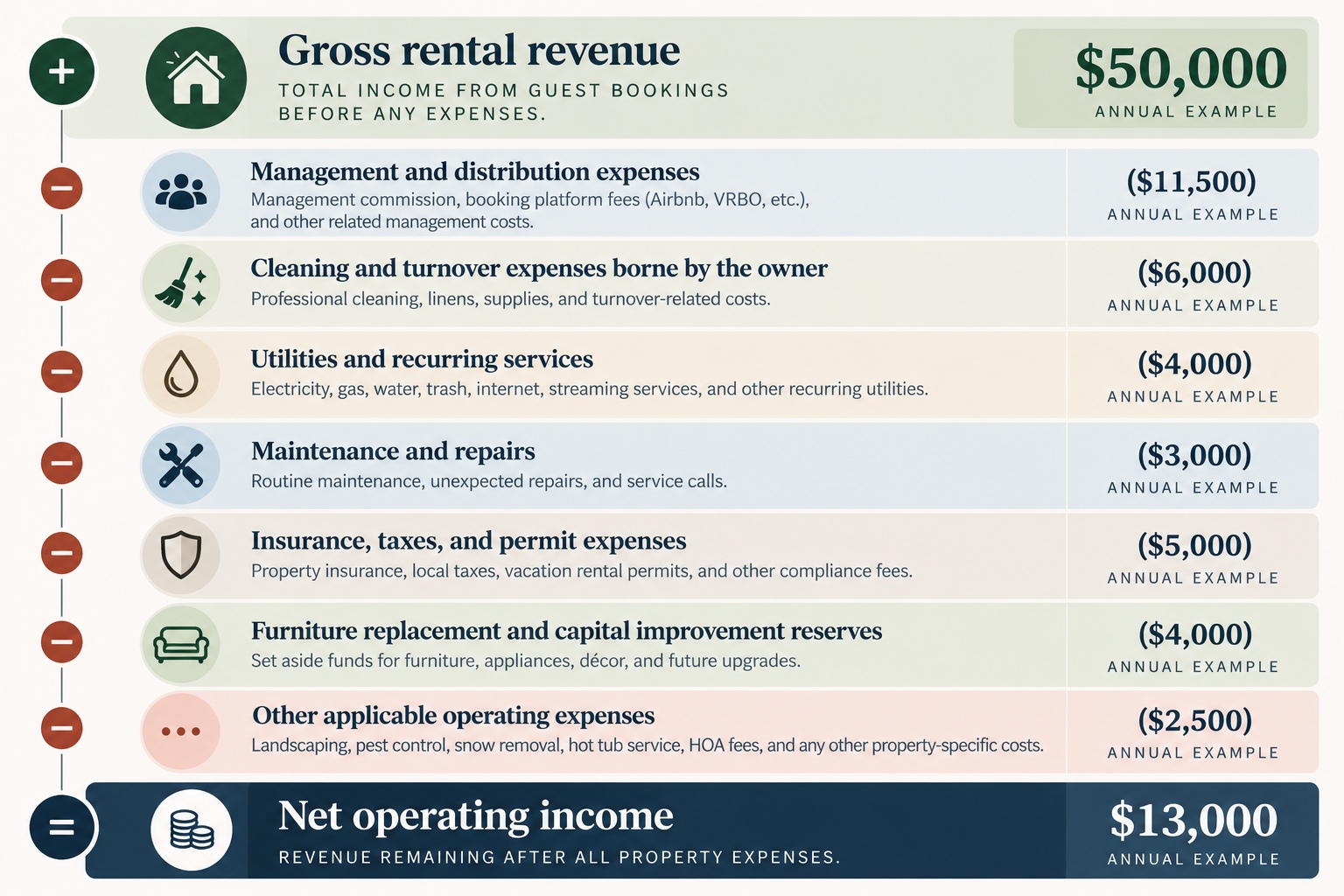
The result is an estimate of operating income before financing costs and income taxes, depending on which expenses have been included.
Mortgage payments, depreciation, appreciation, and tax treatment should be evaluated separately.
A property that generates more bookings does not automatically produce more net income if operating costs also increase substantially.
The most useful analysis considers your property’s location, size, amenities, condition, expected demand, personal-use preferences, and realistic operating expenses.
What Could Your Big Bear Vacation Rental Earn?
Understanding expenses is only one part of evaluating a vacation rental investment. Your property’s location, size, amenities, seasonal demand, and rental rates also influence its earning potential.
Destination Big Bear can help you evaluate your property with a personalized rental income projection and discuss the management and operating costs you should consider.
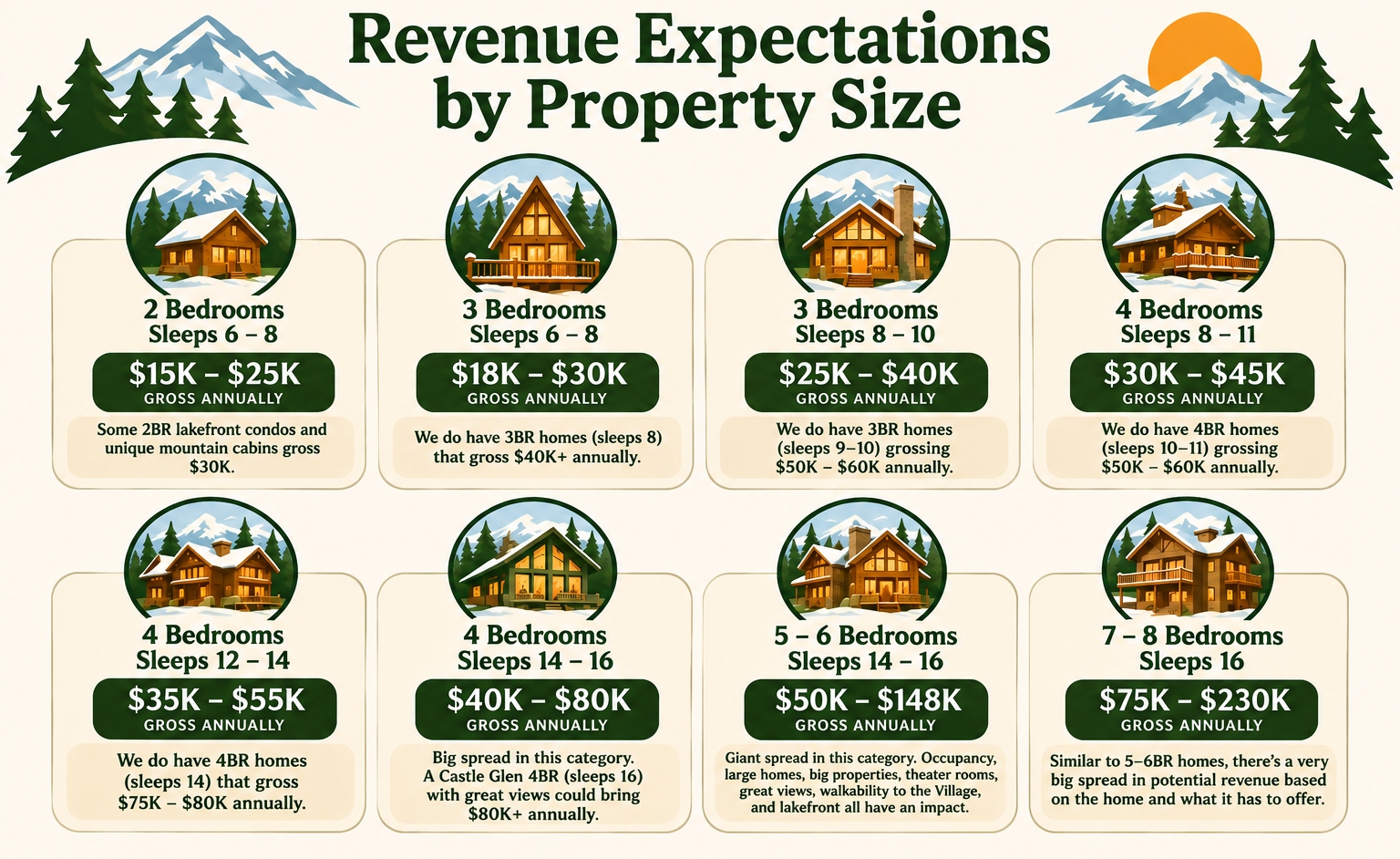
Our local team can help you better understand your property’s rental potential and the expenses involved in preparing it for guests.
Expense examples are provided for general planning purposes. Actual fees, permit requirements, services, and operating costs vary. Homeowners should verify current local regulations, management contract terms, and property-specific estimates before making financial decisions.
Frequently Asked Questions About Big Bear Vacation Rental Costs
The total cost depends on the property’s size, amenities, location, occupancy, and whether you manage it yourself or hire a professional management company.
Typical expenses include property management fees, cleaning, maintenance, utilities, permit renewals, insurance, and seasonal services such as snow removal.
To evaluate profitability, compare projected annual rental revenue against all ownership and operating costs rather than focusing on nightly rates alone.
Fees vary by management company, contract, property, and services included. Homeowners should request a complete breakdown of management commissions and additional charges before comparing proposals.
Not necessarily. A lower commission may come with additional service fees or fewer included services. Compare total expenses, operational support, marketing, and projected net income rather than commission alone.
Common expenses include management fees, cleaning, utilities, insurance, maintenance, snow removal, spa service, and periodic property improvements. Actual costs vary by home.
Yes. Short-term rental requirements depend on whether the property is located in the City of Big Bear Lake or an applicable unincorporated area of San Bernardino County. Owners should confirm current requirements before renting.
Many full-service companies coordinate these services, but the exact scope and additional charges vary. Ask how cleaning, inspections, repairs, emergencies, and vendor payments are handled.
Booking platforms can provide exposure to potential guests, but homeowners should also evaluate direct-booking opportunities and ongoing property marketing. A management company should explain its distribution strategy and any applicable restrictions.
Many management companies allow owner-use dates. Destination Big Bear homeowners can block dates for personal use and discuss rental availability preferences.
Some managers offer revenue management, marketing, guest-experience analysis, and property-improvement support. Ask what services are available and whether additional charges apply.