


Is a Big Bear Cabin a Good Investment? ROI, Income & Costs
A practical guide to buying a Big Bear vacation rental, understanding profitability, and deciding whether the investment makes financial sense. Click on the topic you’re most interested in learning about:
Buying a cabin in Big Bear can be an exciting opportunity. You get a mountain getaway to enjoy with family and friends, a property that may appreciate over time, and the potential to earn vacation rental income when you’re not using it.
But is buying a Big Bear cabin actually a good investment?
The answer depends on what you pay, what the property earns, what it costs to operate, and what you want from ownership.
A beautiful lakefront cabin might provide an incredible personal vacation experience without delivering the highest financial return. Meanwhile, a more modest cabin with a lower purchase price and strong guest appeal could produce a better rental yield.
Before purchasing, it’s important to evaluate the entire investment, not just the nightly rental rate or potential appreciation.
In this guide, we’ll explain how to calculate return on investment (ROI), estimate expenses, evaluate seasonal demand, understand the risks, and decide whether a Big Bear vacation rental aligns with your financial and personal goals.
Considering a cabin purchase?
Is Buying a Cabin in Big Bear Worth It?
A Big Bear cabin may be a worthwhile investment when the purchase price, financing, expected rental revenue, operating costs, and personal-use benefits align with your goals.
However, there are several different ways to define a successful investment.
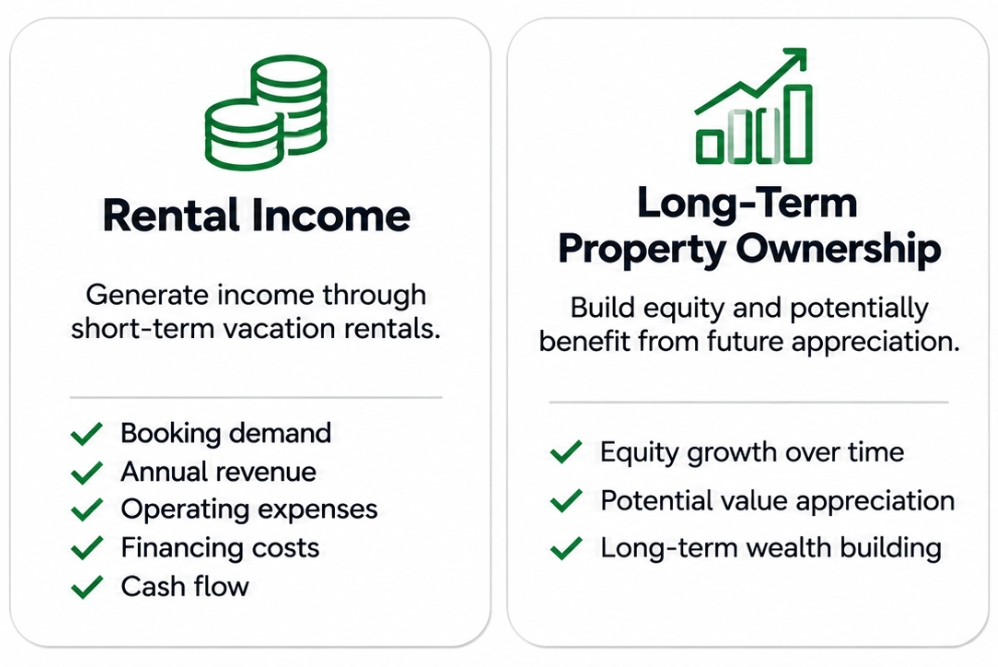

The right investment strategy starts by deciding which of these goals matters most to you.
How Much Can a Big Bear Vacation Rental Earn?
Rental income varies significantly from one property to another.
Factors that can influence annual revenue include:
- Location and proximity to attractions
- Bedroom count and permitted sleeping capacity
- Lake, forest, or mountain views
- Amenities such as hot tubs, fireplaces, game rooms, and outdoor living spaces
- Property condition and guest experience
- Seasonal demand and available rental dates
- Pricing, listing visibility, and marketing
- Guest reviews and repeat bookings
For example, a smaller cabin near the ski resorts may attract winter travelers, while a lakefront property may appeal to guests planning summer vacations.
A larger luxury cabin may generate more gross rental revenue than a smaller property, but it may also cost significantly more to purchase, furnish, insure, maintain, and operate.
Higher rental revenue does not automatically mean a better investment return.
For current revenue ranges, property-size comparisons, and examples, visit our dedicated guide: HOW MUCH CAN A BIG BEAR VACATION RENTAL EARN?
How to Calculate ROI on a Big Bear Vacation Rental
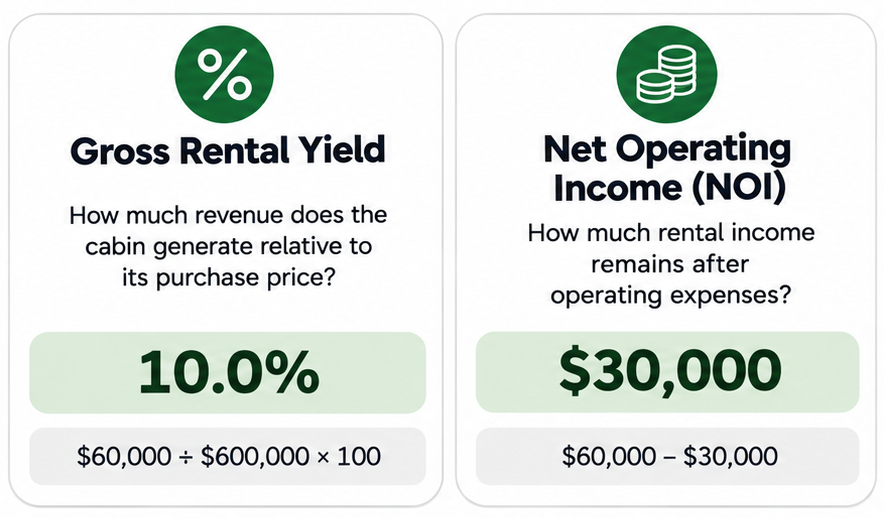
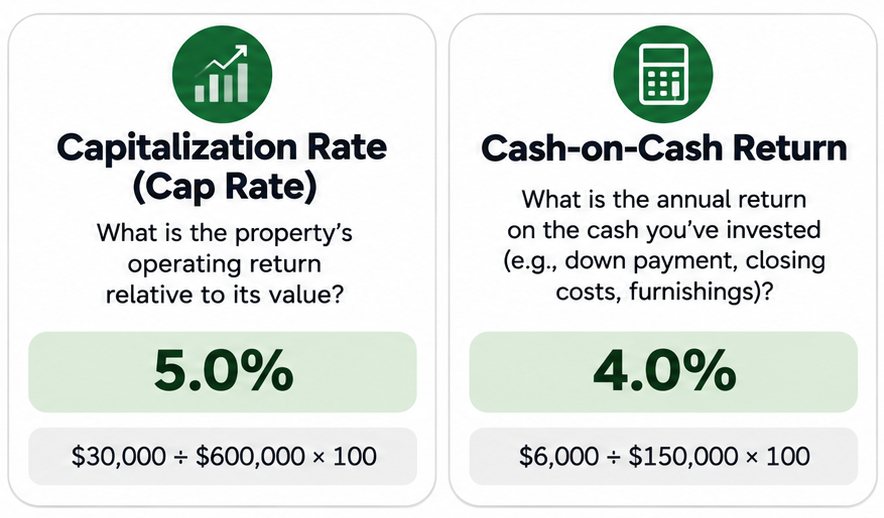
Return on investment helps you evaluate whether the income generated by a property justifies the amount invested.
However, vacation rental investments can be measured in several ways.


Example: Comparing Two Big Bear Cabin Investments
Consider two hypothetical properties.

Cabin A: A smaller, more affordable mountain cabin.
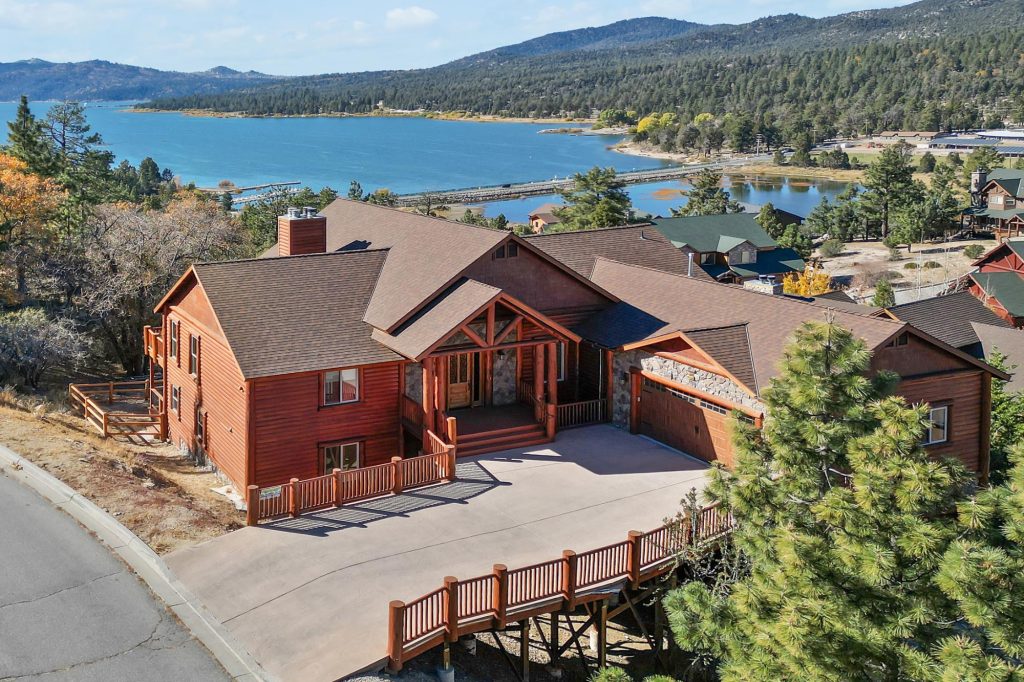
Cabin B: A larger, higher-priced cabin with premium features.
Both may be desirable vacation rentals, but their investment returns could look very different.
| Investment factor | Cabin A | Cabin B |
| Purchase price | $600,000 | $1,200,000 |
| Annual gross rental revenue | $55,000 | $90,000 |
| Annual operating expenses | $25,000 | $45,000 |
| Net operating income | $30,000 | $45,000 |
| Gross rental yield | 9.2% | 7.5% |
| Cap rate based on purchase price | 5.0% | 3.75% |
Illustrative examples only. These are not actual property results, market averages, or rental income projections. Operating expenses are assumed to include property taxes and insurance but exclude financing, income taxes, depreciation, and major capital expenditures.
Cabin B generates $35,000 more in annual gross revenue.
However, Cabin A produces the higher cap rate in this example because its purchase price is substantially lower relative to its net operating income.
This illustrates an important investment principle: The property that earns the most rental revenue isn’t always the property that delivers the strongest return on your investment.
It also doesn’t mean Cabin A is automatically the better purchase. Cabin B may provide personal-use benefits, features, or future resale characteristics that the buyer values more highly.
What Does It Cost to Own a Big Bear Vacation Rental?
Before purchasing a cabin, estimate the full cost of ownership.
Depending on the property, initial expenses may include:
- Down payment and closing costs
- Property inspections and due diligence
- Furnishings, mattresses, linens, and kitchen supplies
- Repairs or renovations
- Safety equipment and compliance improvements
- Short-term rental permits and inspections
- Professional preparation before the first guest stay
An older cabin may require substantial improvements before it can compete effectively as a vacation rental.
Common ongoing costs include:
- Mortgage payments, if financed
- Property taxes
- Appropriate insurance
- Electricity, gas, water, trash, and internet
- Property management and booking-related fees
- Cleaning and laundry
- Maintenance and repairs
- Hot tub servicing
- Snow removal and winter preparation
- Supplies and furniture replacement
- Permit renewals and compliance expenses
Mountain properties can also experience unexpected costs associated with freezing temperatures, snow, roof and drainage issues, and seasonal wear.
Routine maintenance isn’t the same as replacing a roof, upgrading a heating system, renovating a kitchen, or replacing major appliances.
Owners should maintain a separate reserve for larger repairs and improvements.
The amount needed will depend on the property’s age, condition, size, and existing systems.
For a more detailed breakdown, read:
How Financing Changes Your Investment Return
A cabin can produce positive net operating income and still have negative cash flow after mortgage payments.
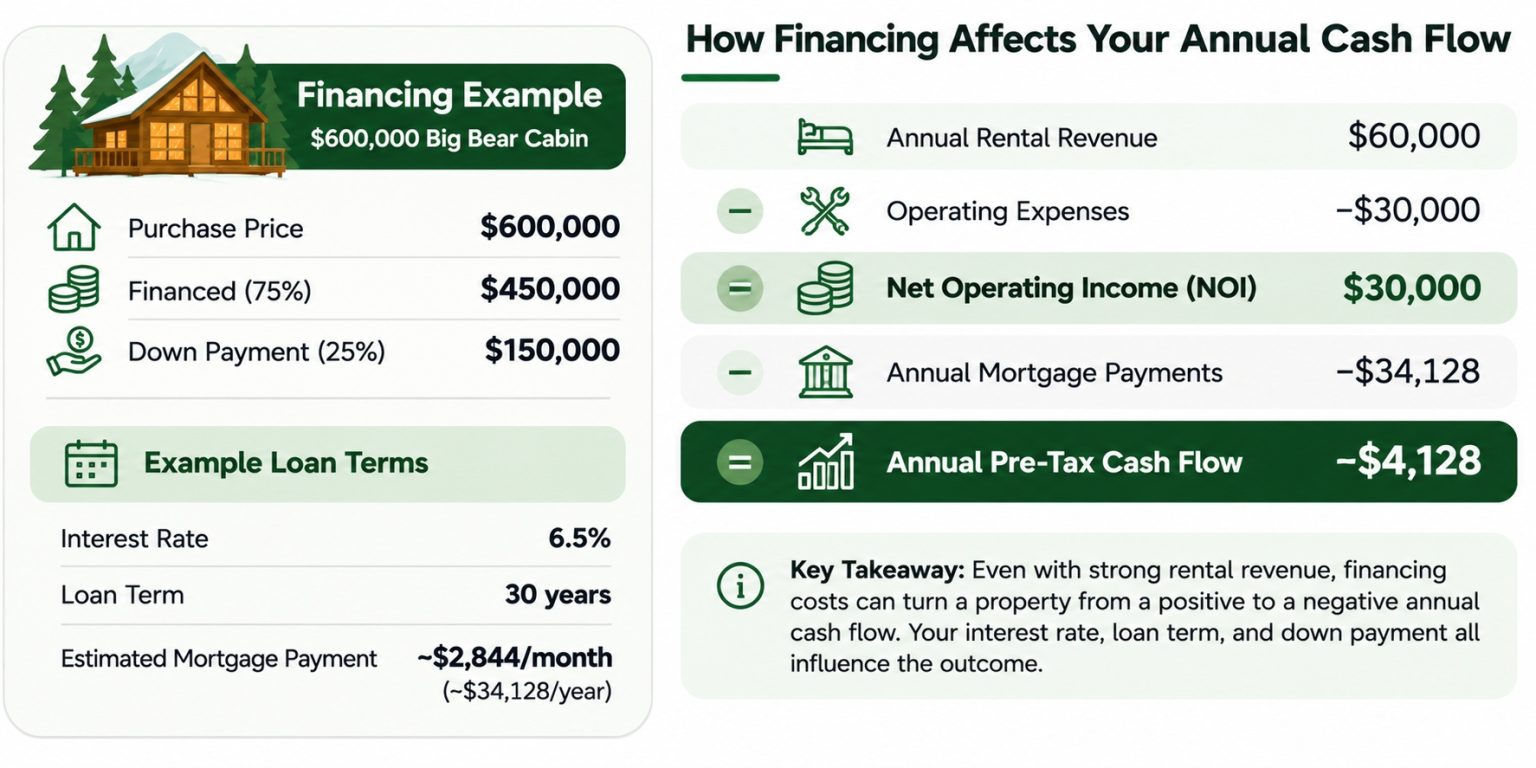
Buyers should request actual loan estimates and compare multiple scenarios before purchasing.
A property that appears profitable based on gross rental revenue alone may require additional owner contributions after financing and operating expenses.
What Are the Biggest Risks of Investing in a Big Bear Vacation Rental?
Every investment carries risk, and vacation rentals have operational considerations that differ from traditional long-term rentals.
Snowfall, road conditions, wildfire impacts, travel demand, and economic conditions can affect reservations.
Avoid assuming that historical peak-season performance will repeat every year.
Mountain homes require ongoing attention.
Heating systems, plumbing, roofs, decks, appliances, hot tubs, and snow-related maintenance can create unplanned expenses.
Frequent guest turnover can increase wear on furnishings, flooring, linens, appliances, and other household items.
Not every issue is guest-caused damage. Some costs reflect normal wear, deferred maintenance, or the age of the property.
Owners should ask how cleaning, inspections, damage documentation, guest protection options, and maintenance coordination are handled.
Destination Big Bear currently requires guests to select either a Damage Waiver or refundable Security Deposit during the reservation process. These options have different terms and limitations and do not eliminate all ownership risks.
Big Bear properties may fall under the City of Big Bear Lake or unincorporated San Bernardino County.
Each jurisdiction has its own short-term rental requirements, including permits, occupancy rules, parking requirements, inspections, and operating standards.
Rules and fees can change.
Before purchasing, verify the property’s jurisdiction and current rental eligibility directly with the appropriate authority.
Mortgage payments continue even when bookings are slow.
Buyers should consider whether they can comfortably cover ownership costs during low-demand periods, unexpected closures, or major repairs.
Real estate values can appreciate, remain flat, or decline.
Future resale proceeds also depend on selling costs, financing balances, market conditions, and the property’s condition.
Do not rely on appreciation alone to justify a purchase that cannot otherwise meet your financial goals.
Can Renting Out a Cabin Help Offset the Cost of a Second Home?
Yes, rental income may help offset some or all of the expenses associated with owning a second home.
However, the amount depends on the property, available rental dates, operating expenses, and financing.
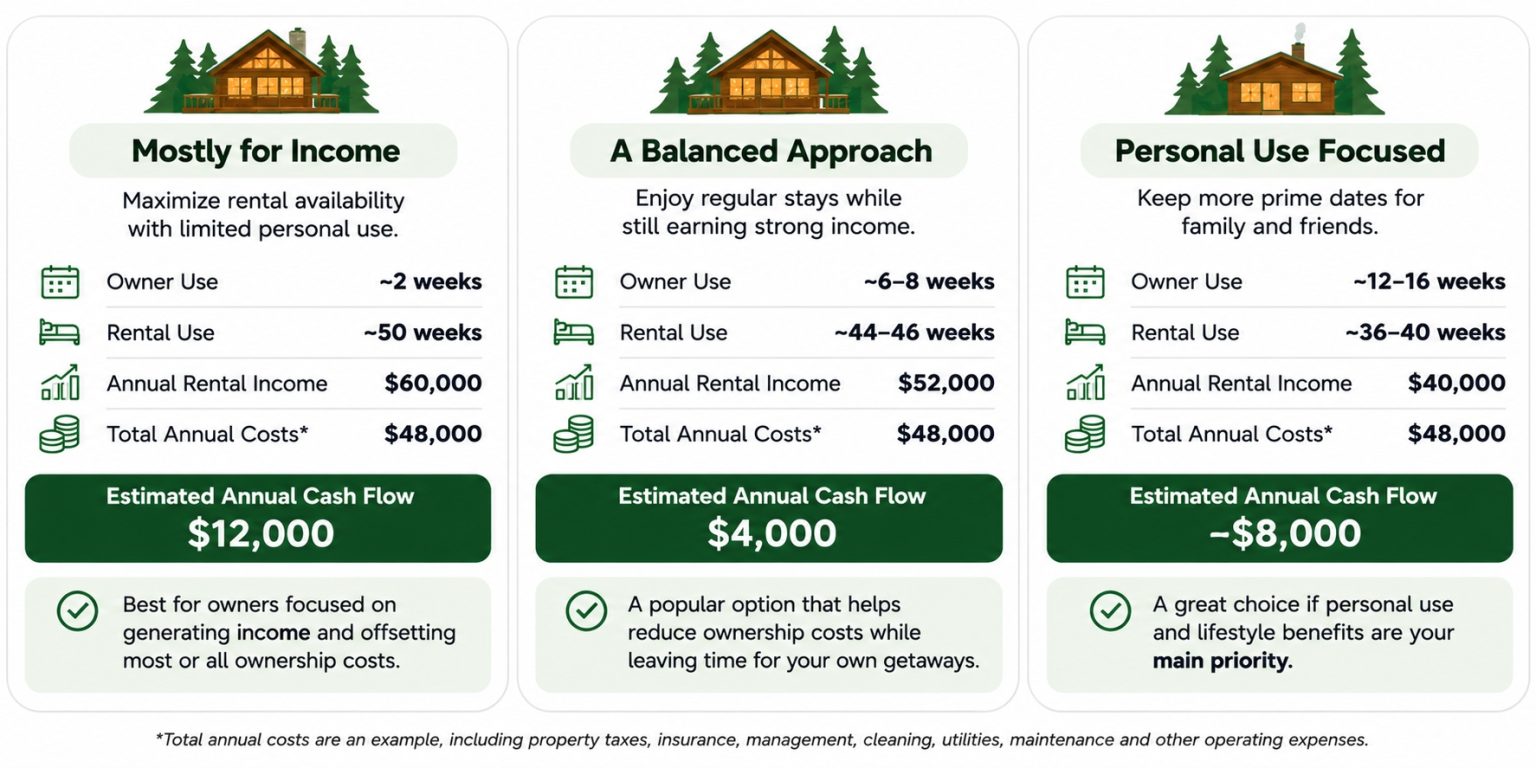
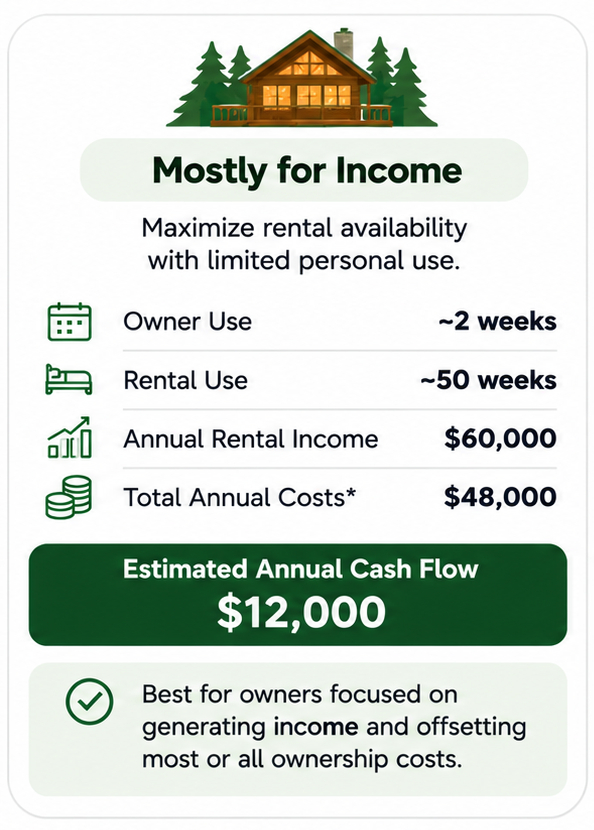
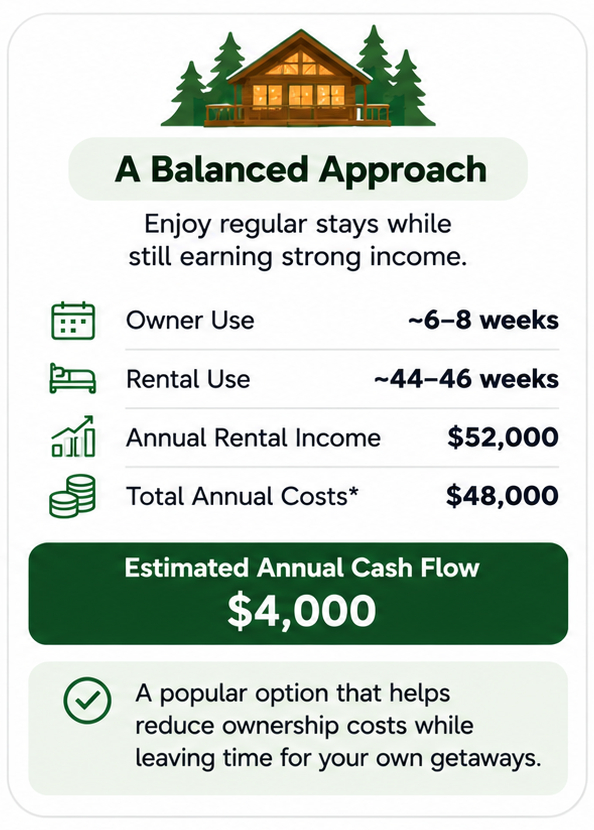
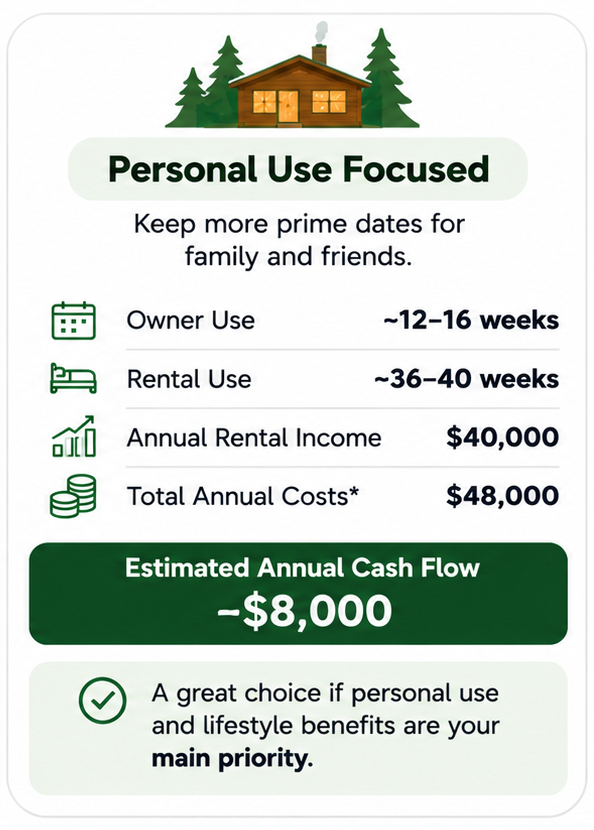

Owners who reserve major holidays and peak-demand weekends for personal use may earn less rental revenue than owners who make those dates available to guests.
That doesn’t necessarily make the purchase a bad decision.
A homeowner who values frequent personal vacations may be satisfied with a property that reduces annual ownership costs rather than producing significant positive cash flow.
The important step is to define that goal before purchasing.
What About Taxes and Vacation Rental Deductions?
Tax treatment is another consideration when evaluating a vacation rental investment.
The IRS has specific rules for properties used both as rentals and personal vacation homes.
In general, the tax treatment of rental income and expenses can depend on how many days the property is rented at fair market value and how many days it is used personally.
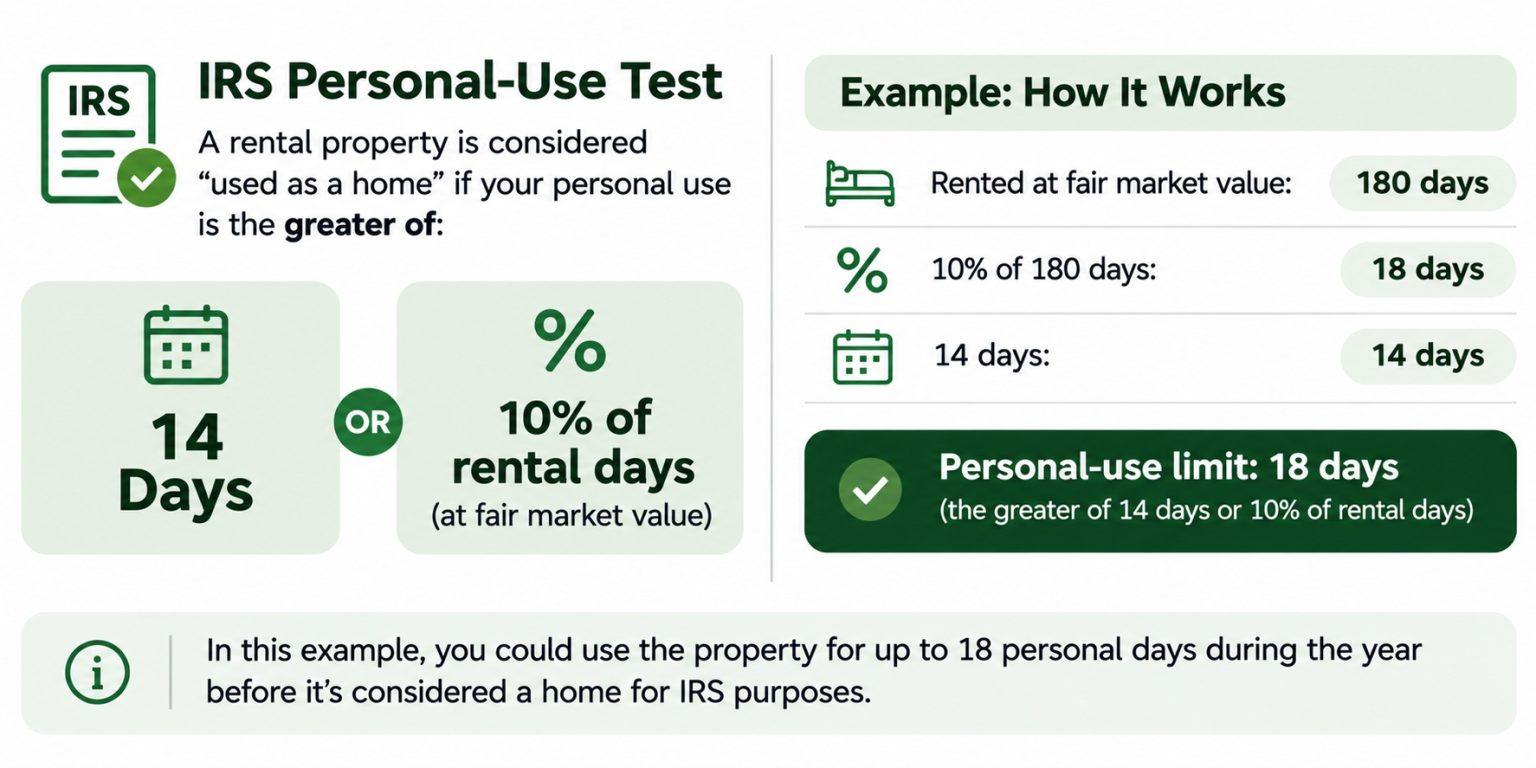
Different rules may apply when a home is rented for fewer than 15 days during the year.
These rules can affect expense deductions and how rental income is reported.
Because tax treatment depends on individual circumstances, buyers should consult a qualified tax professional familiar with vacation rentals.
How to Decide Whether a Big Bear Cabin Is a Good Investment for You
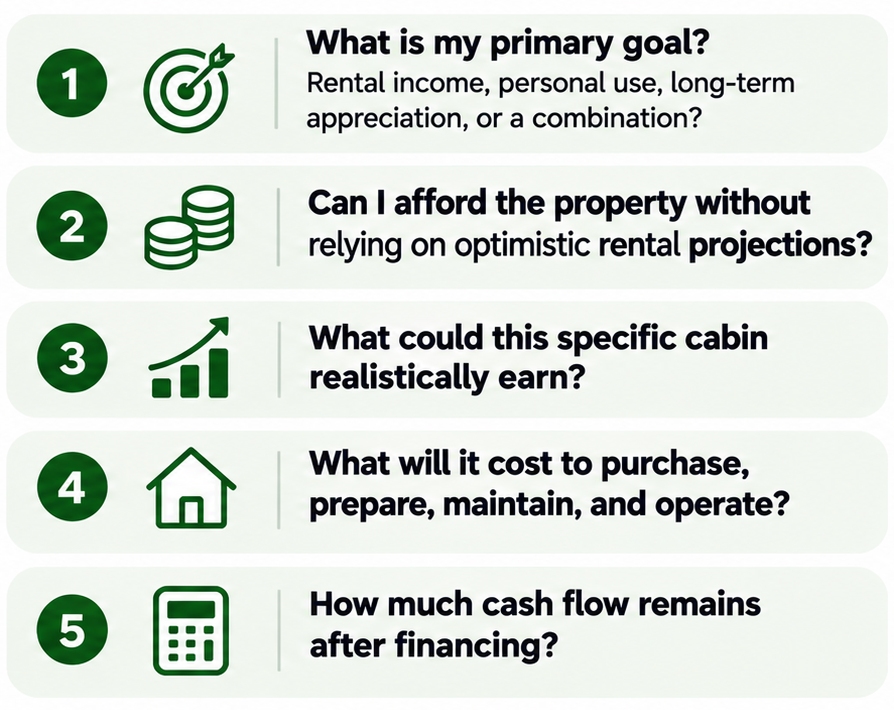
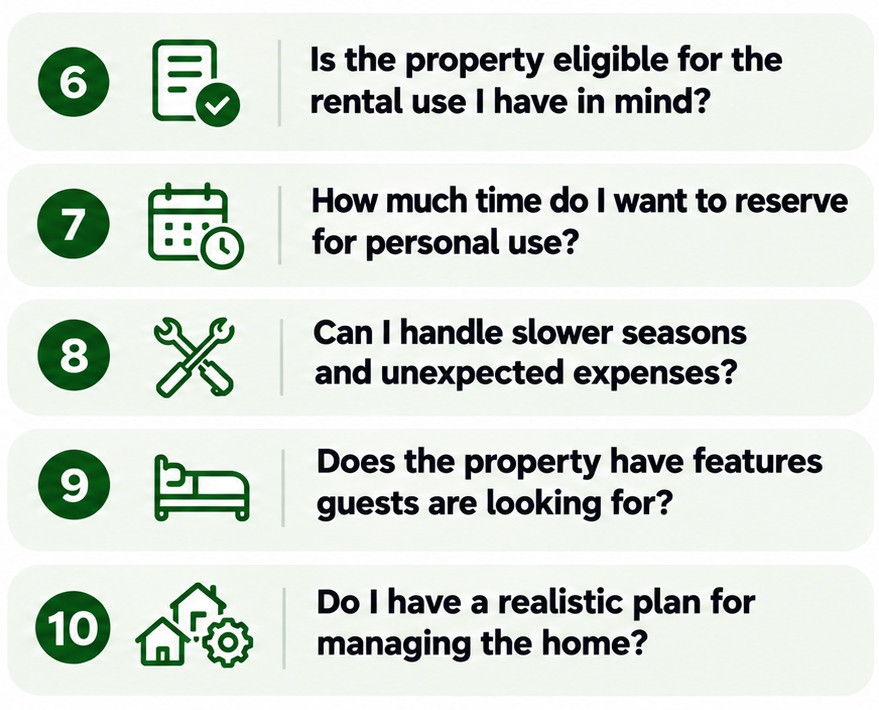
A good investment is one that fits your goals and remains financially manageable under reasonable, conservative assumptions.
Thinking About Buying a Big Bear Vacation Rental?
Before you purchase, understand what the property could earn, what it may cost to operate, and how it fits your goals.
Destination Big Bear can help you explore a property’s rental potential and discuss the services available to support it.
Whether you’re comparing two cabins, considering a second home, or looking to turn an existing property into a vacation rental, a personalized analysis can help you make a more informed decision.
Find out what your Big Bear cabin could earn before you invest.
Rental projections are estimates, not guarantees. Property purchases and financial decisions should be evaluated with qualified real estate, lending, legal, insurance, and tax professionals.
Frequently Asked Questions About Big Bear Cabin Investments
It can be, depending on the purchase price, financing, rental potential, operating expenses, and personal goals.
Buyers should evaluate current property-specific data rather than relying on historical examples or assuming future appreciation.
Some properties can generate positive operating income or cash flow, while others may not cover all ownership and financing costs.
Profitability depends on revenue, expenses, purchase price, financing, and the dates available for rent.
There is no universal ROI that makes every Big Bear cabin a good investment.
Investors should compare cap rates, cash-on-cash returns, financing risks, liquidity, alternative investments, and personal-use benefits.
Annual revenue varies by property size, location, amenities, condition, guest demand, and availability.
See our Big Bear Vacation Rental Income Guide for a more detailed discussion of earning potential.
Not necessarily.
Lakefront homes can offer distinctive guest experiences and premium features, but they may also have higher acquisition and operating costs.
Compare net operating income and total investment rather than assuming a higher purchase price produces a higher return.
Common costs include financing, property taxes, insurance, management, cleaning, utilities, maintenance, permits, seasonal services, and capital improvements.
Yes, subject to applicable regulations and management arrangements.
However, personal-use dates reduce the nights available for rental and may affect tax treatment.
It may, but appreciation is not guaranteed. Property values can also remain flat or decline.
Short-term rentals generally require applicable local authorization. The rules depend on the property’s jurisdiction and eligibility.
Verify requirements with the City of Big Bear Lake or San Bernardino County before buying or advertising the property.
Destination Big Bear can discuss rental potential and management considerations for a prospective property.
Buyers should also consult their real estate agent, lender, inspector, insurance provider, and tax adviser for their respective areas of expertise.